
Flash point testing is one of the most important safety procedures carried out in petroleum, chemical, and paint laboratories. The Closed Cup Flash Point Apparatus is the instrument used to perform this test accurately and in line with international standards.
Whether you are setting up a new lab, upgrading existing equipment, or simply want to understand what this instrument does and how it works, this guide covers everything you need to know.
What is a Closed Cup Flash Point Apparatus?
A Closed Cup Flash Point Apparatus is a laboratory instrument used to measure the flash point of a liquid. The flash point is the lowest temperature at which a liquid produces enough vapour to ignite briefly when an ignition source is applied.
What makes the closed cup method reliable is that the sample is tested inside a sealed or partially sealed cup. This prevents vapour from escaping during the test, which gives a more accurate and conservative flash point value compared to open cup testing.
Closed cup flash point values are lower than open cup values for this reason. Regulatory bodies and safety standards prefer closed cup results because they represent a safer, more cautious measurement.
Why Flash Point Testing is Important
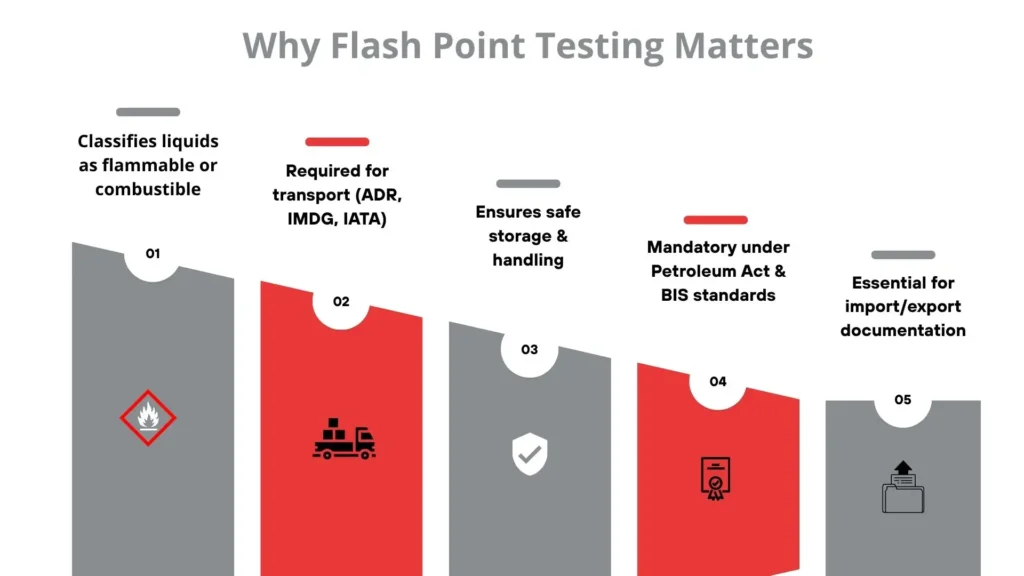
Flash point is not just a number recorded in a lab report. It is a value that directly affects how a liquid is stored, handled, labelled, and transported.
Flash point testing is required to:
- Classify liquids as flammable or combustible under GHS standards
- Comply with transport regulations including ADR for road, IMDG for sea, and IATA for air freight
- Meet requirements under the Petroleum Act,1934, and BIS standards in India
- Ensure safe storage and handling in refineries, chemical plants, and manufacturing facilities
- Generate the documentation required for import and export of hazardous materials
Liquids with a flash point below 60°C are classified as flammable. Those above 60°C are classified as combustible. These classifications determine everything from the type of storage tank used to the fire suppression system installed in a facility.
Types of Closed Cup Flash Point Apparatus
There are three main types of closed cup flash point testers, each suited to a different range of liquids and governed by different international standards.
| Apparatus | Standard | Temperature Range | Best For |
| Pensky-Martens (PMCC) | ASTM D93, ISO 2719, IP 34 | 40°C to 370°C | Petroleum products, biodiesel, lubricating oils |
| Abel Closed Cup | IP 170, BS EN ISO 13736 | 30°C to 70°C | Solvents, paints, petroleum spirits |
| Tag Closed Cup | ASTM D56 | 18°C to 93°C | Low viscosity flammable solvents |
It is important to note that results from different methods cannot be compared directly. The method used must always be mentioned alongside the flash point value in any report or certificate.
Pensky-Martens Closed Cup Apparatus
The Pensky-Martens Closed Cup (PMCC) is the most widely used flash point testing method in the petroleum industry. It is the standard choice for testing diesel, lubricating oils, biodiesel, and other petroleum products.
How It Works
A measured sample of the liquid is placed in a brass or stainless steel test cup. A lid with a shutter mechanism, thermometer port, and an ignition opening is fitted on top. The sample is then heated at a controlled rate while a built in stirrer keeps the temperature uniform throughout the cup.
At regular temperature intervals, the shutter is opened briefly and the ignition source is introduced above the sample surface. The lowest temperature at which a clear, brief flash is seen is recorded as the flash point.
Test Procedures
ASTM D93 and ISO 2719 define three procedures for the Pensky-Martens method:
Procedure A is used for most petroleum products and biodiesel blends. The heating rate is 5 to 6 degrees per minute.
Procedure B is used for residual fuel oils that tend to form a surface film. The heating rate is 1 to 1.5 degrees per minute.
Procedure C is used for pure biodiesel (B100). The heating rate is also 1 to 1.5 degrees per minute.
What Can Be Tested
The Pensky-Martens apparatus is suitable for testing diesel fuel, heating oils, lubricating and hydraulic oils, biodiesel, residual and bunker fuels, transformer oils, waste oils, and petroleum solvents with a flash point above 50°C.
Abel Closed Cup Apparatus
The Abel Closed Cup apparatus is designed specifically for liquids with low flash points, typically below 65°C. It is the preferred method for solvents, petroleum spirits, paints, and other volatile liquids.
How It Works
In the Abel apparatus, the test cup sits inside a water bath rather than being heated directly. This indirect heating method provides slow, gentle, and uniform temperature rise, which is critical when working with volatile samples that can flash at relatively low temperatures.
The water bath temperature is raised at approximately 1 degree per minute. A test cover with a shutter is placed over the cup, and at defined intervals the shutter is opened and the test flame is briefly introduced. The lowest temperature at which a flash is seen is the flash point.
Abel vs Pensky-Martens
| Feature | Abel Closed Cup | Pensky-Martens |
| Temperature Range | 30°C to 70°C | 40°C to 370°C |
| Heating Method | Indirect via water bath | Direct electric or gas heating |
| Heating Rate | Around 1°C per minute | 5 to 6°C per minute (Procedure A) |
| Standard | IP 170 and ISO 13736 | ASTM D93 and ISO 2719 |
| Best For | Solvents, spirits, paints | Petroleum products and oils |
What Can Be Tested
The Abel apparatus is suitable for petroleum spirit, naphtha, paints and lacquers, industrial solvents, aviation fuels like Jet A-1, adhesives and thinners, and pharmaceutical solvents.
Main Components of a Closed Cup Flash Point Apparatus
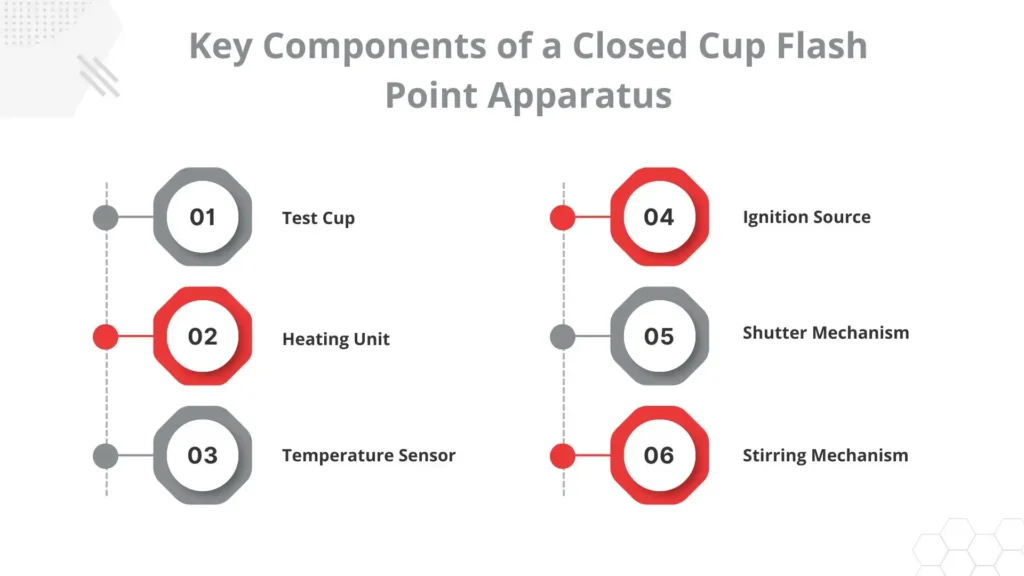
Understanding the components of this instrument helps when evaluating quality, performing maintenance, and troubleshooting issues.
Test Cup
The test cup holds the sample during testing. It is made from brass, stainless steel, or nickel plated copper depending on the apparatus type. The cup must meet the dimensional specifications set by the governing standard, as even small deviations can affect results.
Heating Unit
The heating unit raises the sample temperature at the rate specified by the standard. Quality instruments use PID controllers to maintain a precise, consistent heating rate rather than relying on basic dial thermostats.
Temperature Sensor
Modern instruments use RTD sensors or thermocouples instead of glass thermometers. Digital sensors offer greater accuracy, faster response, and the ability to feed data directly into the control unit or connected systems.
Ignition Source
Two types of ignition sources are used. A gas pilot flame is the traditional option and is found in many standard compliant manual testers. An electric igniter is used in modern automatic instruments. It does not require a gas supply and provides consistent spark positioning test after test.
Shutter Mechanism
The shutter controls when the ignition source is introduced to the sample vapour. In automatic instruments, the shutter is motor operated and timed precisely as per the standard requirements, which removes operator variability from the process.
Stirring Mechanism
The stirrer ensures that the sample heats uniformly throughout. Uneven temperature distribution caused by poor or absent stirring is one of the most common reasons for inaccurate flash point readings.
Standards and Compliance
Testing must be carried out under the correct standard to produce results that are valid for regulatory and commercial use.
For Pensky-Martens Closed Cup Testing
ASTM D93 is the standard used in the United States and widely accepted internationally. ISO 2719 is the international standard used across Europe, India, and most global markets. IP 34 is the Institute of Petroleum standard used in the UK and Europe. IS 1448 (Part 21) is the Indian Standard applicable for petroleum product testing in India.
For Abel Closed Cup Testing
IP 170 covers flash point testing by Abel apparatus for petroleum products. BS EN ISO 13736 is the European and international standard for Abel closed cup flash point determination.
For Tag Closed Cup Testing
ASTM D56 governs flash point testing by the Tag closed cup method for low viscosity solvents.
Always confirm which standard is required by your client, regulatory body, or accreditation authority before selecting an instrument.
Closed Cup vs Open Cup Flash Point Testing
A common question in laboratories is when to use closed cup testing and when open cup testing is appropriate. The table below summarises the key differences.
| Parameter | Closed Cup | Open Cup (Cleveland) |
| Sample Containment | Sealed or partially sealed | Open to atmosphere |
| Flash Point Values | Lower and more conservative | Higher |
| Vapour Behaviour | Vapours retained in cup | Vapours disperse freely |
| Regulatory Use | Safety classification and transport | Lubricating oils and high flash products |
| Standard | ASTM D93, ISO 2719, IP 170 | ASTM D92 |
For safety classification, hazard labelling, and transport documentation, closed cup values are always used. Open cup testing with the Cleveland apparatus is typically applied to lubricating oils, high flash point petroleum products, and cases where the fire point is also required.
Industry Applications
Petroleum Refining and Fuel Testing
Flash point is a mandatory parameter for diesel, fuel oils, kerosene, lubricants, and specialty petroleum products. Refineries and fuel testing labs use the Pensky-Martens apparatus as part of routine quality control before product dispatch.
Paint and Coatings Manufacturing
Paints, thinners, lacquers, and varnishes contain flammable solvents. Flash point data determines their hazard classification, storage requirements, and the documents needed for transport. Abel closed cup testing is the standard method in this industry.
Chemical and Petrochemical Industry
Solvents, process chemicals, and intermediate products require flash point certification for GHS labelling, REACH compliance, and safe handling procedures.
Pharmaceutical Industry
Solvents used in drug manufacturing such as ethanol, isopropanol, and acetone require certified flash point data for GMP compliance and regulatory submissions.
Aviation Fuel Testing
Aviation turbine fuel and aviation gasoline are tested against strict flash point specifications before batch approval. Testing is carried out under approved standard methods.
Shipping and Logistics
Port authorities, freight forwarders, and customs agencies require flash point certificates for flammable cargo classified under IMDG, ADR, or IATA codes.
Government and Statutory Laboratories
Laboratories operating under PESO, BIS, and state petroleum authorities conduct enforcement testing under the Petroleum Act, 1934, using closed cup apparatus.
Research and Academic Institutions
Universities and R&D labs working on fuel chemistry, combustion research, and material safety assessments rely on closed cup testers for reliable, standard compliant data.
How to Choose the Right Closed Cup Flash Point Apparatus
Identify Your Sample Type and Flash Point Range
The nature of the liquid being tested is the first and most important factor.
For petroleum products, biodiesel, lubricants, and oils with a flash point above 40°C, the Pensky-Martens apparatus is the right choice. For solvents, paints, petroleum spirits, and liquids with a flash point below 65°C, the Abel closed cup apparatus is appropriate. For very low flash point solvents, the Tag closed cup method may also apply.
Manual or Automatic
Manual instruments are suitable for laboratories with low testing frequency, training use, and budget constrained environments.
Automatic instruments are the better choice for commercial and accredited laboratories, high volume testing facilities, and situations where consistent, operator independent results and digital reporting are required.
Standards Compliance
Verify that the instrument is designed and validated for the specific standard applicable to your work. This includes ASTM D93, ISO 2719, IP 34, IP 170, or IS 1448 depending on your industry and geography.
Build Quality
Look for a brass or stainless steel test cup with correct standard dimensions, a PID temperature controller for precise heating rates, a calibrated digital temperature sensor, and a robust shutter and stirring mechanism.
Calibration and After Sales Support
A flash point apparatus needs regular calibration to remain accurate over time. When choosing a supplier, confirm that calibration certificates with national traceability are provided, spare parts are locally available, technical support and service are accessible, and the manufacturer has experience with ASTM, ISO, and IS standard instruments.
Maintenance Guidelines
After every test
Clean the test cup and lid using a suitable solvent and dry thoroughly before the next use. Remove any residue from the shutter and cup interior. Let the apparatus cool completely before disassembling it.
Monthly
Verify temperature calibration against a traceable reference thermometer. Inspect and service the ignition source. Check that the stirring mechanism operates smoothly and consistently.
Annually
Perform a full calibration check using certified reference materials. Inspect the heating element and PID controller performance. Verify test cup dimensions against the standard specifications.
Residual sample contamination from a previous test is a common cause of inaccurate flash point readings. Thorough cleaning after every test is not optional. It is essential for maintaining result accuracy.
Frequently Asked Questions
What is the difference between Pensky-Martens and Abel closed cup apparatus?
The Pensky-Martens apparatus is used for petroleum products with flash points between 40°C and 370°C and is governed by ASTM D93 and ISO 2719. The Abel apparatus is designed for low flash point liquids below 65°C and is governed by IP 170 and ISO 13736. Results from the two methods are not interchangeable.
What does PMCC mean in flash point testing?
PMCC stands for Pensky-Martens Closed Cup. It refers to the standard method for testing the flash point of petroleum products and biodiesel as per ASTM D93 and ISO 2719.
Why are closed cup flash point values lower than open cup values?
In a closed cup test, vapours are trapped inside the cup and build up faster, causing ignition at a lower temperature. In an open cup test, vapours escape freely and a higher temperature is needed to form an ignitable concentration. Closed cup values are therefore used for safety classification.
How often should a flash point apparatus be calibrated?
Calibration should be verified monthly during regular use and a full calibration should be done annually or after any repair or significant reading discrepancy.
Is an automatic flash point tester more accurate than a manual one?
Automatic testers remove variability caused by manual observation and operator timing. For accredited laboratories and commercial testing, automatic instruments provide more consistent and reproducible results.
Which standard applies to flash point testing in India?
IS 1448 (Part 21) specifies the Pensky-Martens closed cup method for petroleum products in India. ASTM D93 and ISO 2719 are also accepted in NABL accredited laboratories.
Conclusion
The Closed Cup Flash Point Apparatus is a core instrument in any laboratory that works with flammable or combustible liquids. Selecting the right apparatus depends on the type of sample, the applicable standard, and the volume and nature of testing being performed.
A reliable, well maintained instrument ensures that results are accurate, consistent, and compliant with the standards that matter to your clients and regulators.
Closed Cup Flash Point Apparatus from Acute Instruments
Acute Instruments manufactures and supplies a complete range of laboratory testing instruments for petroleum, chemical, paint, and quality control laboratories across India and internationally.
Our Closed Cup Flash Point Apparatus range includes Pensky-Martens and Abel closed cup testers in both manual and automatic configurations. All instruments are built to ASTM D93, ISO 2719, IP 34, IP 170, and IS 1448 specifications and are supported by calibration certificates with national traceability.
Contact our team to discuss your testing requirements, request a product brochure, or get a quotation tailored to your laboratory.